










UAE Sustainable Baby Brands: Market Reality vs. Consumer Expectations
The UAE sustainable baby brands landscape reveals a critical disconnect between environmental commitments and measurable action. While global fashion has undergone dramatic transformation toward sustainability in recent years, the UAE's children's wear sector presents a paradoxical scenario: increasing brand claims of environmental responsibility coupled with limited transparency to verify those commitments.
Corporate Accountability Gap in UAE Sustainable Baby Brands
According to IPSOS's comprehensive Views on sustainability report specific to the UAE market, 54% of respondents believe companies lack adequate support for sustainability and ethical best practices. This skepticism extends directly to UAE sustainable baby brands, where consumers struggle to differentiate genuine environmental leadership from superficial marketing claims.
The complexity lies in sustainability's multifaceted definition. UAE consumers primarily associate sustainability with renewable energy (highest recognition) and recycling initiatives, followed by nature preservation and resource conservation. However, only 12% connect sustainability to ethical consumption patterns, 8% to plastic-free products, and merely 5% to water conservation - the very metrics most relevant to textile production.
This knowledge gap explains why few parents comprehend that conventional cotton cultivation requires over 20,000 liters of water per kilogram (equivalent to one pair of jeans and one t-shirt), or recognize the human cost of chemical exposure affecting agricultural workers. Even less obvious are implications of polyester content in children's garments - microplastic shedding that persists for centuries.
Consumer Intent vs. Purchase Behavior Analysis
Fifty-nine percent of UAE consumers acknowledge environmental issues as a primary global concern, yet brand sustainability commitments influence purchasing decisions for only 27% of shoppers. This demographic skews male, ages 25-34, and upper-income brackets - suggesting environmental consciousness correlates with disposable income and education rather than representing universal priority.
The Premium Pricing Paradox
Contrary to assumptions that sustainability claims justify price resistance, data reveals substantial willingness to invest in verified eco-friendly products. PwC's Global Consumer Insights Survey February 2023 documented that 70% of respondents would pay premium pricing for sustainable goods "to some or great extent."
More specifically, the Consumer markets survey 2023 (June) quantified this commitment:
- 80% overall willingness to pay above-market rates
- 40% accepting up to 10% price premiums
- 10% tolerating up to 30% increases
- 7% (predominantly Millennials and Gen Z) open to even higher pricing for authentic sustainability
This data presents UAE sustainable baby brands with unprecedented pricing power—provided transparency validates environmental claims.
Transparency Crisis Among UAE Sustainable Baby Brands
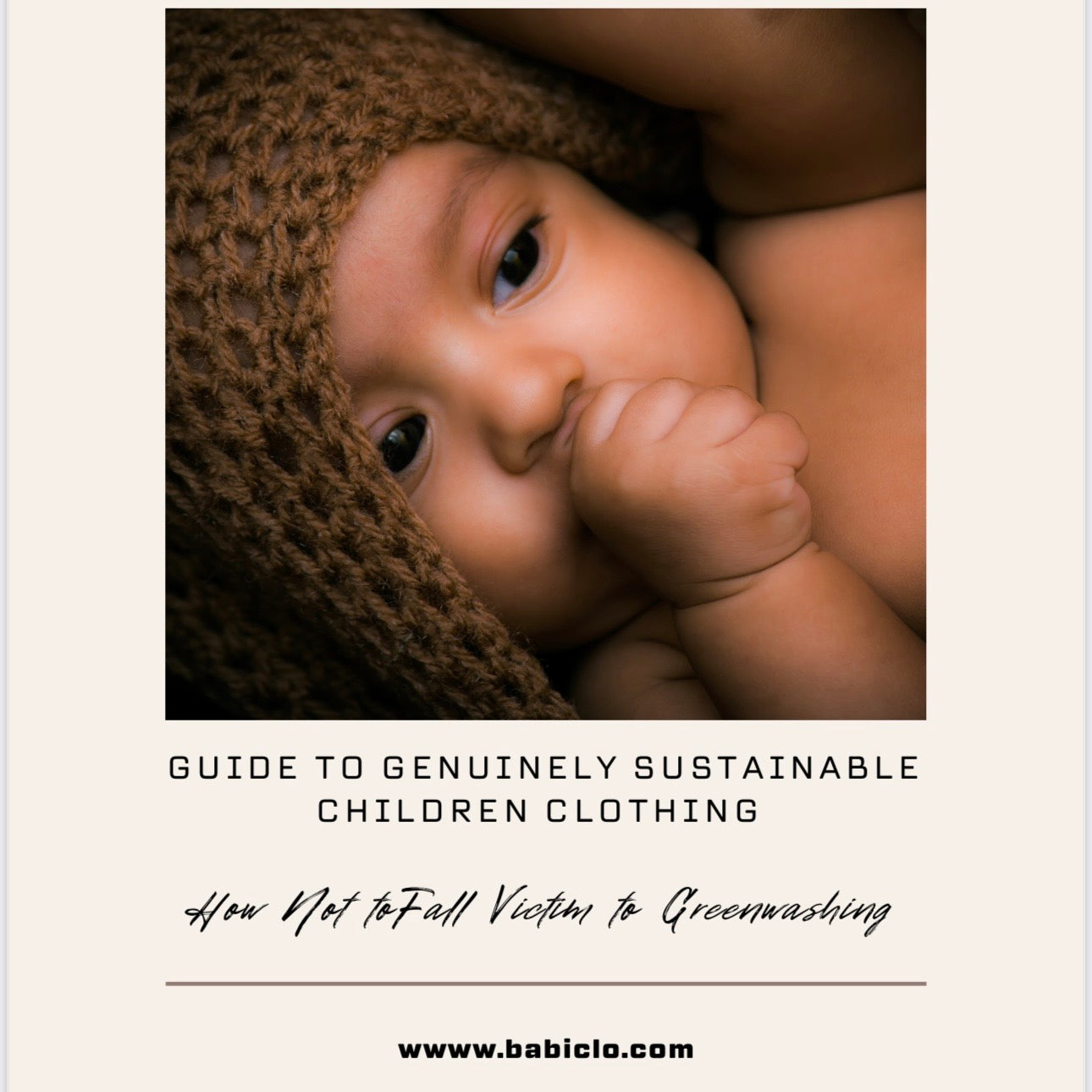
Despite extensive research into established UAE-based children's brands making sustainability claims, comprehensive analysis revealed a concerning pattern: virtually no brands provided sufficient supply chain transparency, certification documentation, or quantifiable environmental metrics to verify statements positioning "sustainability at their core."
This transparency deficit represents the fundamental challenge facing UAE sustainable baby brands. Without accessible evidence - GOTS certification, carbon footprint calculations, water usage documentation, fair trade verification, or manufacturing facility audits - consumers cannot distinguish authentic environmental leadership from greenwashing tactics designed to exploit growing eco-consciousness without corresponding operational changes.
Industry Imperative: Verification Over Claims
For UAE sustainable baby brands to capture the substantial market segment willing to pay premium pricing, the industry must transition from aspirational marketing language to demonstrable proof:
Required transparency standards:
- Third-party certification (GOTS, Fair Trade, B Corporation)
- Published supply chain mapping
- Quantified environmental impact metrics
- Manufacturing facility documentation
- Material sourcing verification
The UAE sustainable baby brands sector stands at a critical inflection point. Consumer willingness to invest in environmental responsibility exists, but trust requires substantiation. Brands providing genuine transparency will capture this premium market; those perpetuating greenwashing risk long-term reputational damage as consumer sophistication increases.
We welcome contact from UAE sustainable baby brands demonstrating verifiable environmental commitments through documented transparency. Please reach out to share your sustainability credentials an.
Leave a comment